Whatsapp
Loading is where a trailer earns or loses its keep on equipment moves. Fixed-deck trailers depend on ramps, forklifts or cranes at every pickup point, a sequence that costs time, labour and risk to both operator and cargo. WholeChainTech builds a hydraulic lift trailer around a different sequence: the deck lowers to the ground, the load rolls on, and the platform rises to transport height under power. Four engineering layers hold the sequence together — synchronized lifting, mechanical self-locking, dual-mode control and serviceable durability.
I. Synchronized lifting: uniform force, no shock, no jamming
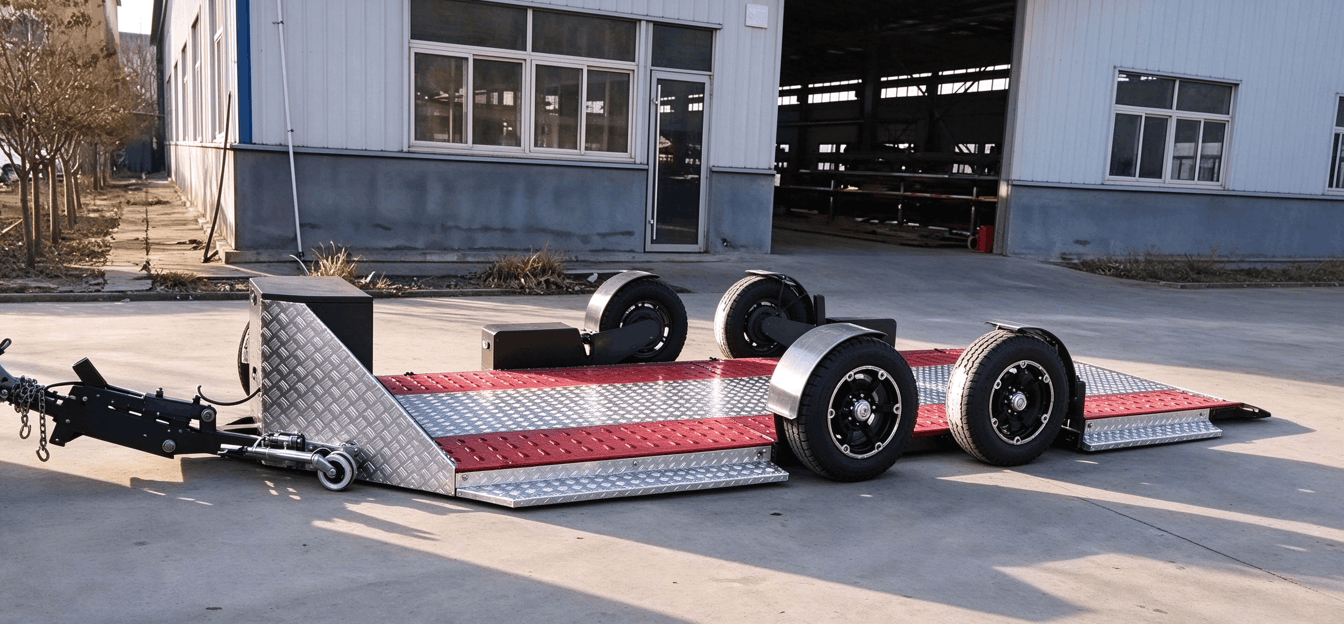
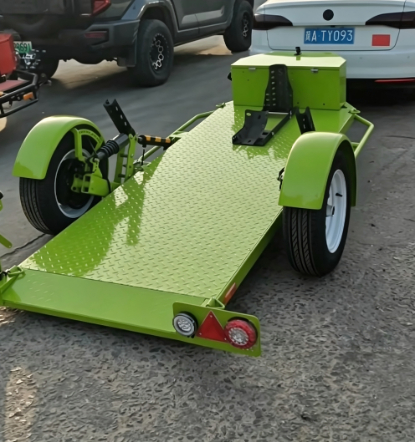
Multiple hydraulic cylinders on the hydraulic lift trailer work in coordination rather than as independent units. Because the cylinders lift together, the deck rises and lowers evenly, without tilting, shock at the top of the stroke or jamming mid-travel. Generators, welding sets and moulds therefore pass through the lift cycle without shock loading.
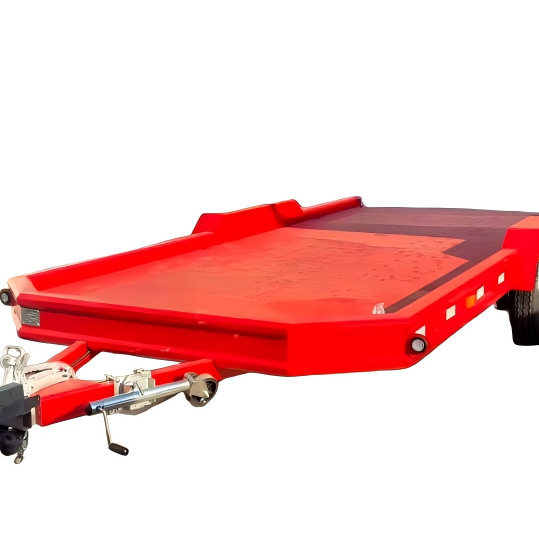
The hydraulic circuit is rated to a maximum working pressure of 120 bar, and the deck lowers to 120 mm ground clearance in the loading position. At 120 mm, forklifts and small tracked machinery drive directly onto the deck, with no ramps, no jacking and no secondary lifting equipment at the delivery point.
II. Mechanical self-locking: locked at height, stable on the road
A lifted deck is only useful if the deck stays lifted. The system pairs a hydraulic safety valve with a mechanical self-locking device: on reaching transport height the deck locks independently of hydraulic pressure, which prevents accidental settlement during driving, including on rough roads.
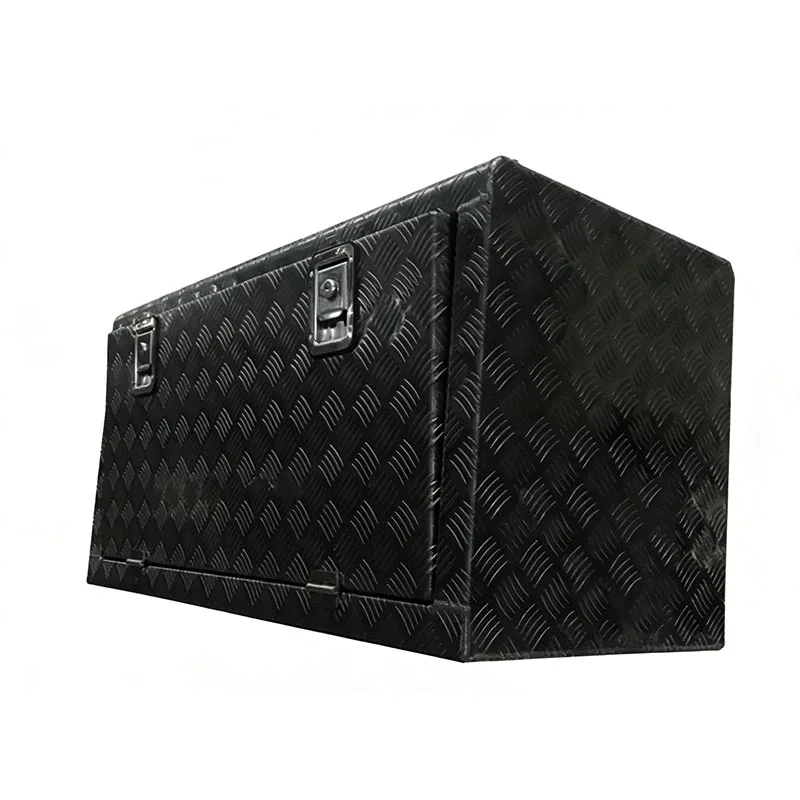
Mechanical locking is what separates a working lift system from a convenient one. Hydraulic-only designs can drift down as pressure relaxes over a long haul, and the mechanical lock removes the drift failure mode entirely. Frame corners are reinforced against collision damage, and pre-installed mounting points accept guardrails or toolboxes.
The deck surface is diamond-tread anti-slip steel plate, specified for direct rolling by small tracked machinery. The tandem-axle chassis runs on four-wheel independent suspension and LT245/75R16 tires, which keeps the combination stable at highway speed and on rough site surfaces.
III. Dual-mode control: powered operation with a manual fallback
The hydraulic lift trailer runs on a 12V DC hydraulic power unit with two control paths, wireless remote and manual backup. The remote handles routine operation from a safe standing position; manual mode keeps the deck workable in the field when power is unavailable, which is the normal situation on remote construction sites and rural delivery points.
For importers, one detail matters at the booking stage: the 12V 80AH battery is not included in export shipments. The unit accepts a standard market battery sourced locally, so no proprietary part has to cross an ocean.
IV. Serviceable durability: standard parts, coated for the climate
Hydraulic systems fail in the maintenance line before they fail in the field. On the hydraulic lift trailer, tires, bearings and hydraulic components follow standard market models available from local stock in most markets, which shortens service lead time and lowers long-term operating cost.
Corrosion protection is built into the production line, not applied as an afterthought. Frames pass through shot-blasting and a full pre-treatment sequence before electrostatic powder coating and high-temperature curing, which resists wear, scratches and corrosion in humid conditions, dusty sites and high-salinity coastal environments. High-intensity warning lights and reflective markings at the rear keep the unit visible in night operations and on worksites.
Industry value and outlook
The hydraulic lift trailer is available as a 5-tonne dual-axle model with a 3,350 × 1,746 mm deck and a 2.5-tonne model in the same line, alongside flatbed configurations for operations that do not need powered lifting.
Integrating lifting, locking, control and durability into one system moves the buying decision from “a trailer with a hydraulic option” to a loading solution judged on the full duty cycle: loading time, operator safety, road stability and years of serviceable operation.
Custom deck dimensions, colours and accessories such as toolboxes, mesh sides and spare-tire mounts are quoted per order, with export documentation prepared for each shipment.
About Chongqing Wholechaintech Automotive Components Co., Ltd.
Founded in 2016 and based in the Liangjiang New Area industrial park in Chongqing, WholeChainTech designs, manufactures and services truck bodies, multi-purpose trailers and core modification components. The company combines research and development, production and system integration to deliver complete vehicle solutions to customers at home and abroad.
Hydraulic lift trailer specifications reflect the 5-tonne dual-axle model as currently published and may vary with configuration and market. Confirm final specifications, destination-market regulatory requirements and duty treatment at quotation.
-