News

Trailer Compliance 2027: Rule Changes in US, EU, GCC, Africa

2026-10-20 0 Leave me a message
Trailer compliance decided more purchase orders in 2026 than price did. For two decades, buyers ranked three things when sourcing a trailer: price, then build quality, then paperwork. Compliance sat last — a hurdle to clear after the decision was made. In 2026 the order inverted. In four of the world's major trailer markets, a document now decides whether the equipment enters the country at all. Buyers who price a trailer without pricing the trailer compliance file are no longer buying equipment; they are buying a shipment which may not clear customs. A market-by-market overview follows, with the documents to prepare before placing an order. WholeChainTech, a trailer and truck body manufacturer with production bases in Chongqing and Qingdao, reviews what changed in each market and what buyers should prepare.


United States: scope comes before price


Antidumping and countervailing duty orders on van-type trailers and subassemblies from China took effect in October 2026, following the ITC's affirmative injury determination on September 25. Section 232 steel and aluminum tariffs apply where a covered trailer falls within the derivative product categories. The practical consequence: the HS classification of the exact product — finished trailer, subassembly, or kit — now drives landed cost more than the FOB price does. What to prepare: a written product-scope confirmation, and a documented DOT lighting and braking configuration for the unit being imported. 


European Union: the CoC is the product


ECE R13 trailer compliance has covered O-category trailers for years. O3 and O4 units above 3,500 kg must meet the full braking performance requirements, including mandatory ABS and compatibility with the towing vehicle's EBS, and enforcement at registration has tightened. Without a Certificate of Conformity (CoC) issued for the model, an importer cannot register the unit in any member state, regardless of build quality. What to prepare: ABS module specification (4S/2M), brake force distribution settings, and the type-approval documentation trail.

Saudi Arabia and the GCC: the label is now part of the product


SASO's new labeling requirement took effect on October 1, 2026. Trailers and semi-trailers must carry the supplier's name and Commercial Registration (CR) number permanently on the product itself. The marking is checked at the conformity stage: a unit without the required marking cannot obtain a Certificate of Conformity (CoC) on the SABER platform, and a shipment without a valid Shipment Certificate (SC) issued before arrival faces detention, storage charges and possible return. What to prepare: Arabic and English markings, the correct Saudi HS code, and a test report from an accredited laboratory — confirmed before the shipment is booked, not after.


Africa and Southeast Asia: inspection happens before the ship leaves


Across Nigeria, Kenya, Ghana and South Africa, destination conformity inspection for trailer compliance — SONCAP, KEBS, GSA and NRCS respectively — is standard and conducted pre-shipment. Vietnam notified the WTO in July 2026 of a draft national technical regulation for trailers and semi-trailers (QCVN XX:2026/BXD), which introduces type testing and market certification for imported units. Vietnam Register has signalled an October 2026 target for entry into force, with the final numbering and date to be confirmed on publication. Buyers already quoting for Vietnamese projects should assume type testing will be required. In such markets, the schedule risk is not the production line but the inspection booking. What to prepare: an inspection slot booked alongside the production slot, and a specification matched to the route rather than the catalogue.


The common thread


Four regions, four regulatory systems, one conclusion: trailer compliance documentation is now a production input, not a shipping afterthought. A supplier who can only quote a price and a lead time is answering last year's question.


One production line, four compliance packages


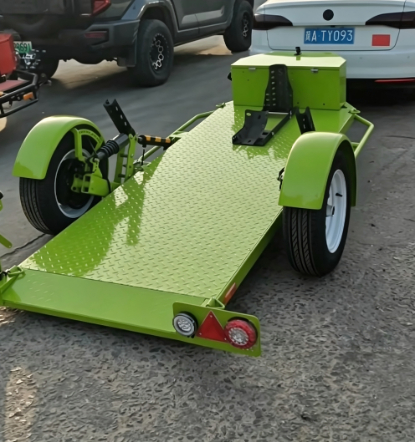
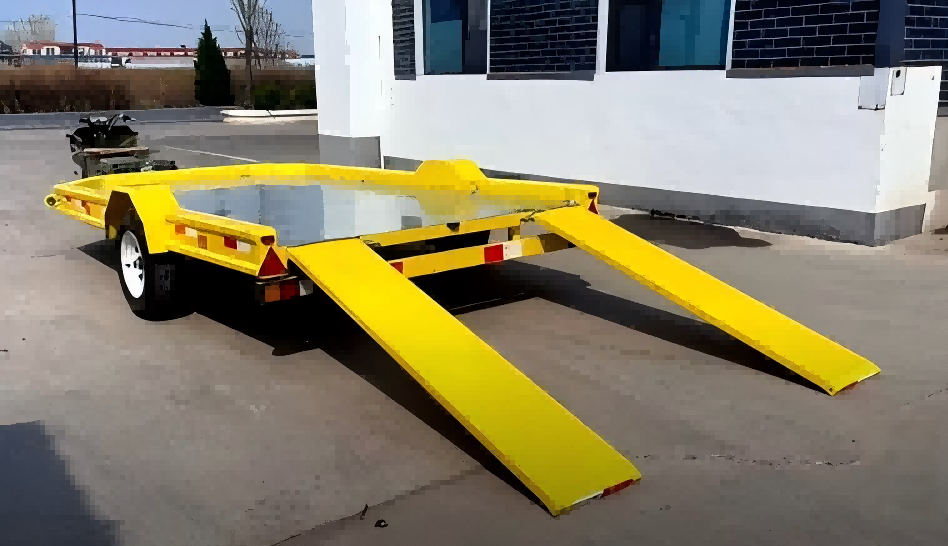
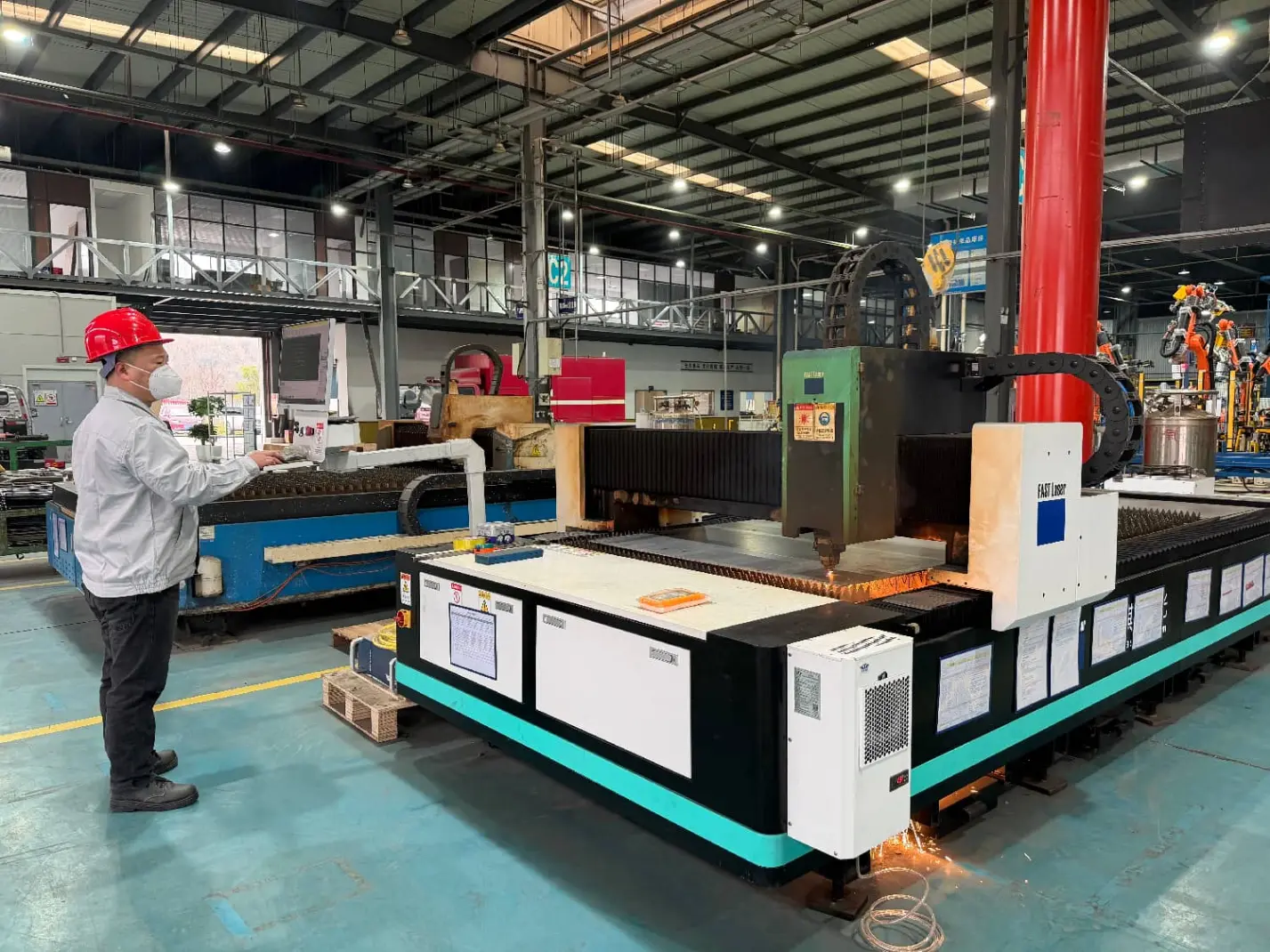
WholeChainTech builds trailers and truck bodies at production bases in Chongqing and Qingdao, with in-house electrophoresis and powder coating lines, panel production and final assembly. The same production schedule carries different market specifications, instead of treating compliance as a separate project. In practice, the WholeChainTech team prepares U.S. DOT lighting and braking configurations, EU ECE R13 braking packages, GCC labeling and certification files, and pre-shipment inspection documentation for African and Southeast Asian destinations — each destination market with a dedicated document set, from one factory. Hydraulic lift trailers are scheduled on the same lines.


Tell us your destination market, and we will send the matching checklist:


- Shipping to the U.S.? Ask for the product-scope confirmation note.

- Shipping to the EU? Ask for the ECE R13 configuration sheet.

- Shipping to the GCC? Ask for the SABER labeling and PC/SC document list.

- Shipping to Africa or Southeast Asia? Ask for the pre-shipment inspection checklist.


Send the destination market and product type, and the WholeChainTech team replies within 48 hours with the matching document list, a production slot, and a quote.


FAQ


Q: What documents are needed to import a trailer from China?

A: Requirements depend on the destination market. The U.S. requires a product-scope confirmation under the new AD/CVD orders plus DOT configuration documentation. The EU requires a Certificate of Conformity under ECE R13 for trailers above 3,500 kg. Saudi Arabia requires SABER PC and SC certificates with SASO-compliant labeling. Most African markets require pre-shipment conformity inspection (SONCAP, KEBS, GSA or NRCS).


Q: What is the SASO labeling rule for trailers in Saudi Arabia?

A: Effective October 1, 2026, trailers and semi-trailers must carry the supplier's name and Commercial Registration (CR) number permanently marked on the product. The marking is verified during conformity assessment, and a shipment without a valid Shipment Certificate issued before arrival cannot clear customs on the SABER platform.


Q: How long does trailer compliance documentation take?

A: Preparation time varies by market: DOT configuration files and product-scope confirmations typically take 1–2 weeks alongside production; ECE R13 type-approval documentation should be maintained per model in advance; pre-shipment inspections in Africa (for example, GSA in Ghana) need several weeks of lead time. Booking the inspection slot together with the production slot avoids the most common delay.


Q: Can one factory serve multiple compliance markets?

A: Yes. WholeChainTech runs U.S., EU, GCC, African and Southeast Asian specifications through the same production bases in Chongqing and Qingdao, preparing the matching document set for each destination market. 

Related News
Leave me a message
X
We use cookies to offer you a better browsing experience, analyze site traffic and personalize content. By using this site, you agree to our use of cookies. Privacy Policy
RejectAccept