Whatsapp
When buyers compare two box bodies, most start with price per unit — and the cheaper quote often wins. The number that decides operating economics over the next decade, however, is not the price tag. What decides is the finished body's empty weight, measured before a single pallet goes in. Every kilogram of body weight is a kilogram of payload that can never be earned, a fraction of a litre of fuel burned carrying structure instead of cargo, and a set of tires and brake pads that wears out a little sooner.
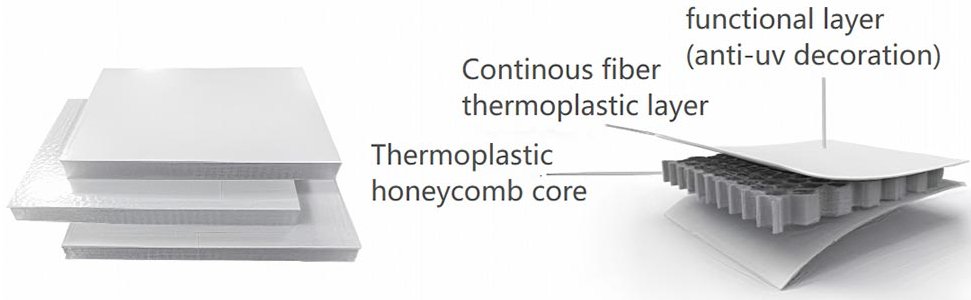
A honeycomb panel is a sandwich structure: two thin skins bonded to a lightweight cellular core. The skins carry the bending loads, the core holds the skins apart and carries the shear between them, and the whole panel does the job of a much heavier solid sheet at a fraction of the weight.
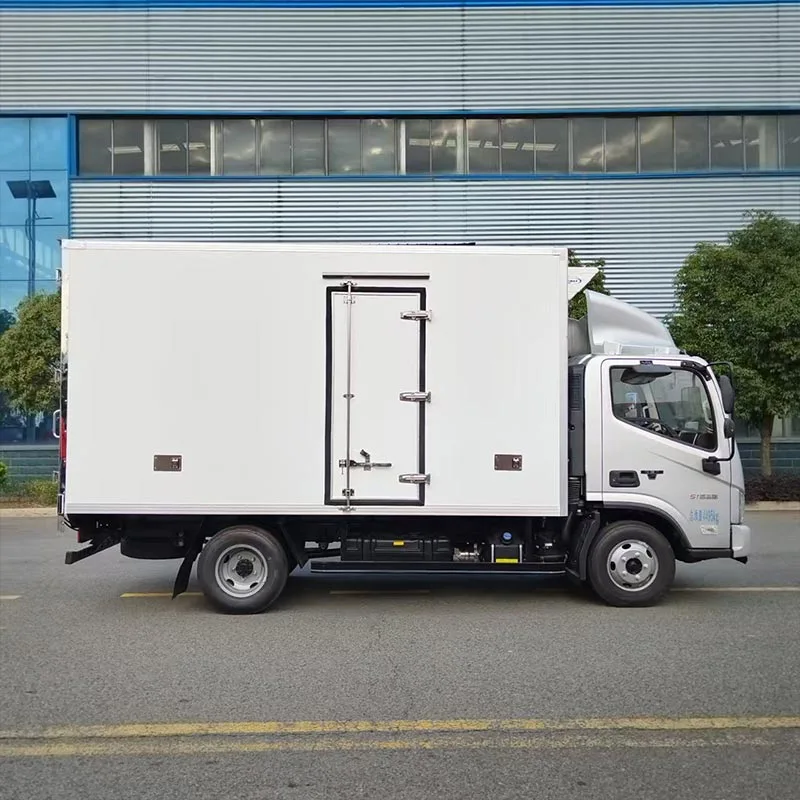
Our standard truck body panel uses a polypropylene honeycomb core bonded to fiberglass-reinforced thermoplastic skins, produced in-house at 4.4 kg per square metre in 25 mm thickness. On a typical 4.2-metre box body, the construction removes 300 to 400 kilograms from the finished vehicle compared with a conventional steel panel build — weight that returns directly to the payload.
Three hundred kilograms sounds like a rounding error, so the arithmetic is worth doing openly rather than asserting a benefit.
Assume a distribution truck running two deliveries a day, six days a week, across 50 operating weeks. Roughly 600 loads run in a year. Taking a conservative net payload gain of 200 kg per load — after mounting tolerances and frame fittings — the gain totals about 120 tonnes of additional cargo capacity per year from one body, on one truck, for the life of the vehicle.
Even at half the utilisation, the gain is measured in tens of tonnes annually, not kilograms. And because the extra capacity comes from structure rather than from a larger truck, the capacity arrives without extra fuel per tonne carried, without a heavier axle rating, and without changing the vehicle's licence class.
Weight saving also shows up on every kilometre, including empty return legs that earn nothing.
As a working range, a light commercial vehicle typically burns roughly 0.1 to 0.3 litres more fuel per 100 km for every 100 kg of added mass, depending on vehicle size, route profile and how much of the route is urban stop-start versus highway cruising. City distribution — exactly the duty cycle most 4.2-metre box bodies run — sits at the upper end of the range, because acceleration resistance is paid back on every brake and every set of lights.
Three hundred kilograms off the curb weight therefore translates into a measurable fuel saving on every trip, loaded or empty. Brake pads, tires and suspension bushes also wear more slowly on a lighter axle, which shortens the maintenance line on the operating budget in the same direction.
Not every route needs the lightest panel. WholeChainTech builds three structures so buyers can match weight to duty cycle and budget:
In European cities, distribution runs are short, dense and stop-heavy, diesel prices stay high, and warehouse space is billed by the cubic metre. There the payback comes through fuel and through carrying one more pallet in a zone where every cubic metre of storage is rented by the month.
In African markets, roads are rough and axle-load limits often decide how much goods a truck can legally bring to town. A lighter body means the truck leaves the depot fuller and returns with more revenue per run — without overloading the axle.
Tell us your payload target, operating route and budget, and the engineering team will recommend the right panel construction, send the weight comparison against your current body, and prepare a quotation.
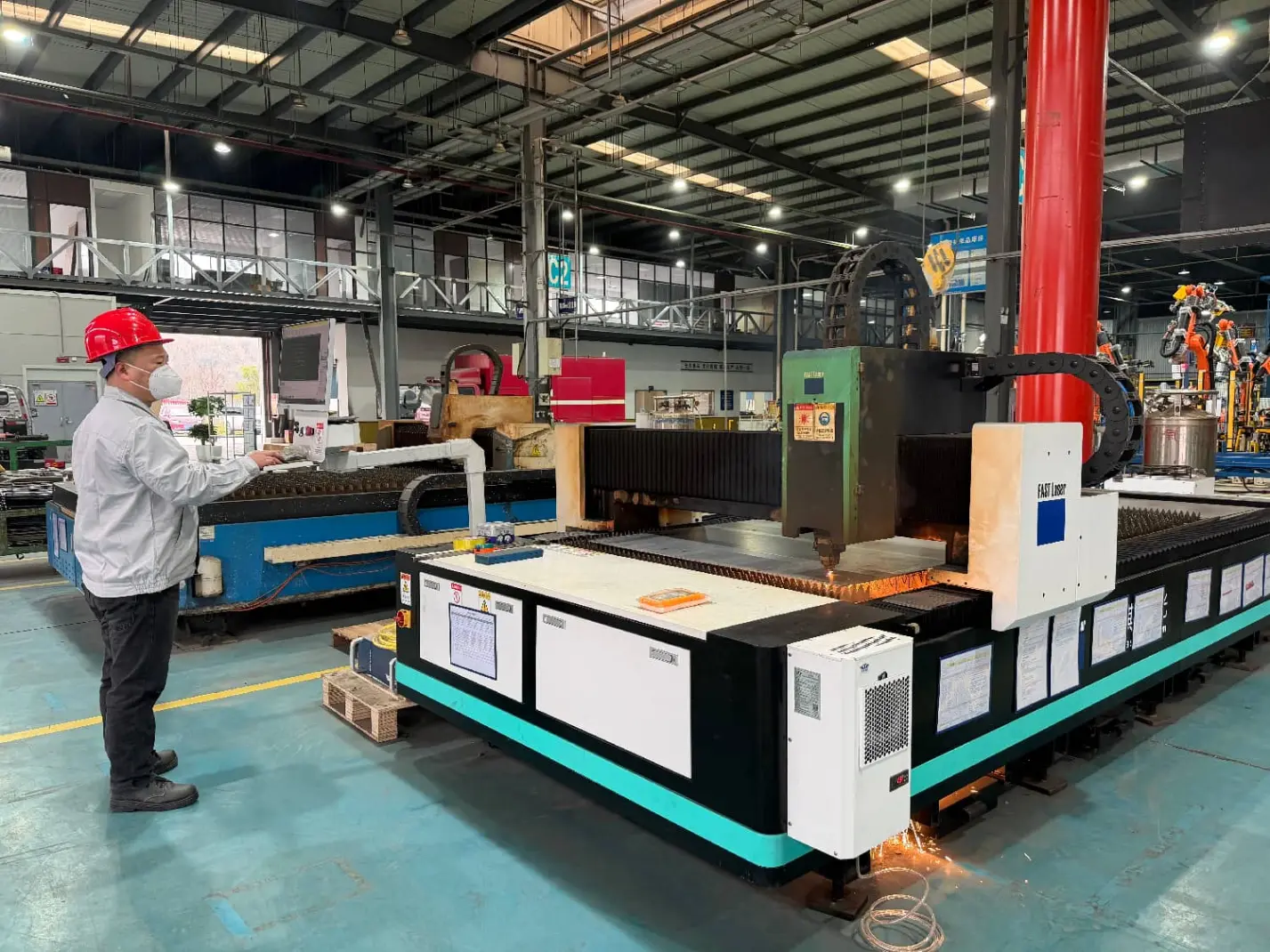
Chongqing WholeChainTech Automotive Components Co., Ltd. manufactures honeycomb and PET foam core truck box bodies at production bases in Chongqing and Qingdao, China, with in-house panel production, electrophoretic coating and powder coating lines.
Figures for weight saving and fuel consumption are indicative engineering ranges and vary with body specification, vehicle and route. Confirm final specifications against your vehicle's homologation documents before ordering.
-