News

What are the safety requirements for climbing special vehicles?

2026-03-04 0 Leave me a message

Here are the safety requirements for special vehicle ramps, based on international standards and best practices.

Key Safety Requirements for Special Vehicle Ramps

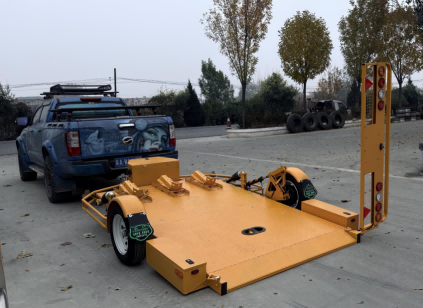
Ramps used for loading and unloading special vehicles must meet stringent safety standards to prevent accidents and structural failure. Key requirements include:

1. Load Capacity and Structural Integrity: Ramps must be designed and constructed from materials capable of supporting the maximum intended load . A safety factor is applied; for example, some regulations require a ramp to withstand a mass equal to 125% of its safe working load without permanent deformation . The safe working load must be clearly and permanently marked on the ramp .

2. Dimensions and Slope: Ramps must provide adequate width for safe equipment operation . In some jurisdictions, industrial ramps must be at least two feet wider than the widest vehicle using them . The maximum slope is also regulated to ensure vehicle stability. For general industrial use, a slope not exceeding 1 vertical to 8 horizontal is common, while ramps for powered industrial trucks alone may be steeper, up to 1 in 3 .

3. Surface and Edge Protection: The ramp surface must be constructed of nonslip materials or roughened to provide adequate traction . To prevent vehicles from running off the edge, ramps must be equipped with side guards or curbs. A typical requirement is a curb at least 8 inches (approx. 20 cm) high along the open sides , or timber guards of a minimum size . Ramps used in marine operations require side boards to prevent falls .

4. Operational and Control Safety: Power-operated ramps must incorporate safety features. They must not be operable when the vehicle is in motion  and should produce an audible signal during operation . Safety devices are required to stop ramp movement if an obstacle or person is contacted, typically triggered by a force not exceeding 150 N . A manual means of operation should also be available in case of power failure .

5. Securing and Maintenance: Ramps must be properly secured in the stowed position during vehicle travel to prevent unintended deployment . When in use for loading, they must be properly secured to the vehicle or ground to prevent shifting . All ramps and their components must be well-maintained, kept clear of obstructions, and in good repair.

Related News
Leave me a message
X
We use cookies to offer you a better browsing experience, analyze site traffic and personalize content. By using this site, you agree to our use of cookies. Privacy Policy
Reject Accept